
PUEBLO GARZÓN
CULTURE & COUNTRYSIDE
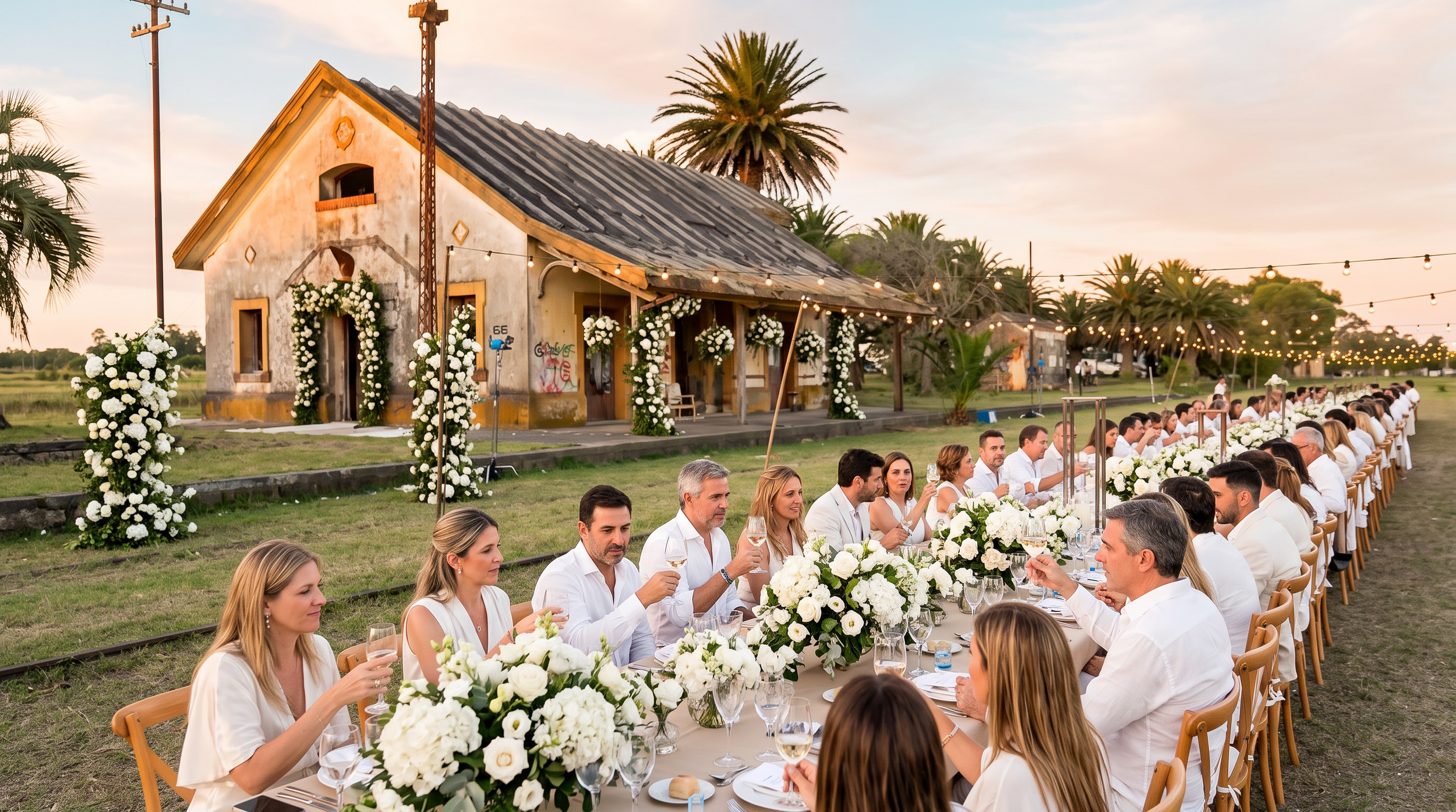
There is something wonderfully unexpected about Pueblo Garzón. Surrounded by rolling countryside and reached by quiet rural roads, the tiny village feels as though it belongs to another era — old houses, dirt streets, a church, railway station and palm-lined central plaza.
Garzón was once a much busier rural town. Its mill and railway helped support a population of around 2,000 people during its heyday, before the loss of the railway contributed to a long period of decline. Today, only a fraction of that population remains, and much of the village's original character has survived.
What happened next is perhaps what makes Garzón so interesting. Rather than becoming another resort town, it was gradually rediscovered by chefs, winemakers, artists and international residents drawn to its isolation and landscape.
FOOD, WINE & ART
The arrival of Argentine chef Francis Mallmann was an important part of Garzón's revival. His small hotel and restaurant occupies an old general store overlooking the village plaza, with cooking centered around fire and local ingredients.
Nearby, Bodega Garzón helped establish the surrounding countryside as one of Uruguay's important wine and olive-growing destinations. Vineyards and olive groves now sit among granite hills, cattle country and native vegetation, bringing visitors well beyond the coast and into this part of rural Maldonado.
Art has become another unexpected part of the story. Garzón has attracted galleries, artists and cultural projects, including CAMPO, whose 13-hectare arts campus was one of architect Rafael Viñoly's final designs.
SURROUNDING GARZÓN
For me, however, the real beauty of Garzón lies beyond the village itself.
The surrounding landscape is vast and wonderfully rural — sierras, streams, native woodland, vineyards, olive groves and working farmland. Properties here tend to offer considerably more land and privacy than the coastal chacras, ranging from smaller country retreats to substantial estates extending across hundreds of hectares. The area remains agricultural, with cattle, forestry, vineyards, olive production and other rural enterprises all part of the landscape.
And yet José Ignacio is only about 30 kilometers away, creating an unusual contrast: it is possible to spend the morning surrounded by horses and countryside, have lunch in the village, and still reach the Atlantic coast later in the day.
That is what I find so compelling about Garzón. It feels genuinely rural rather than designed to look rural. The luxury is in the land, the privacy and the landscape — but alongside it has emerged this remarkable little world of food, wine, art and architecture.
For someone looking for space and a life connected to the countryside, while still remaining within reach of José Ignacio, Pueblo Garzón and the land surrounding it offer something quite unlike anywhere else in the area.