
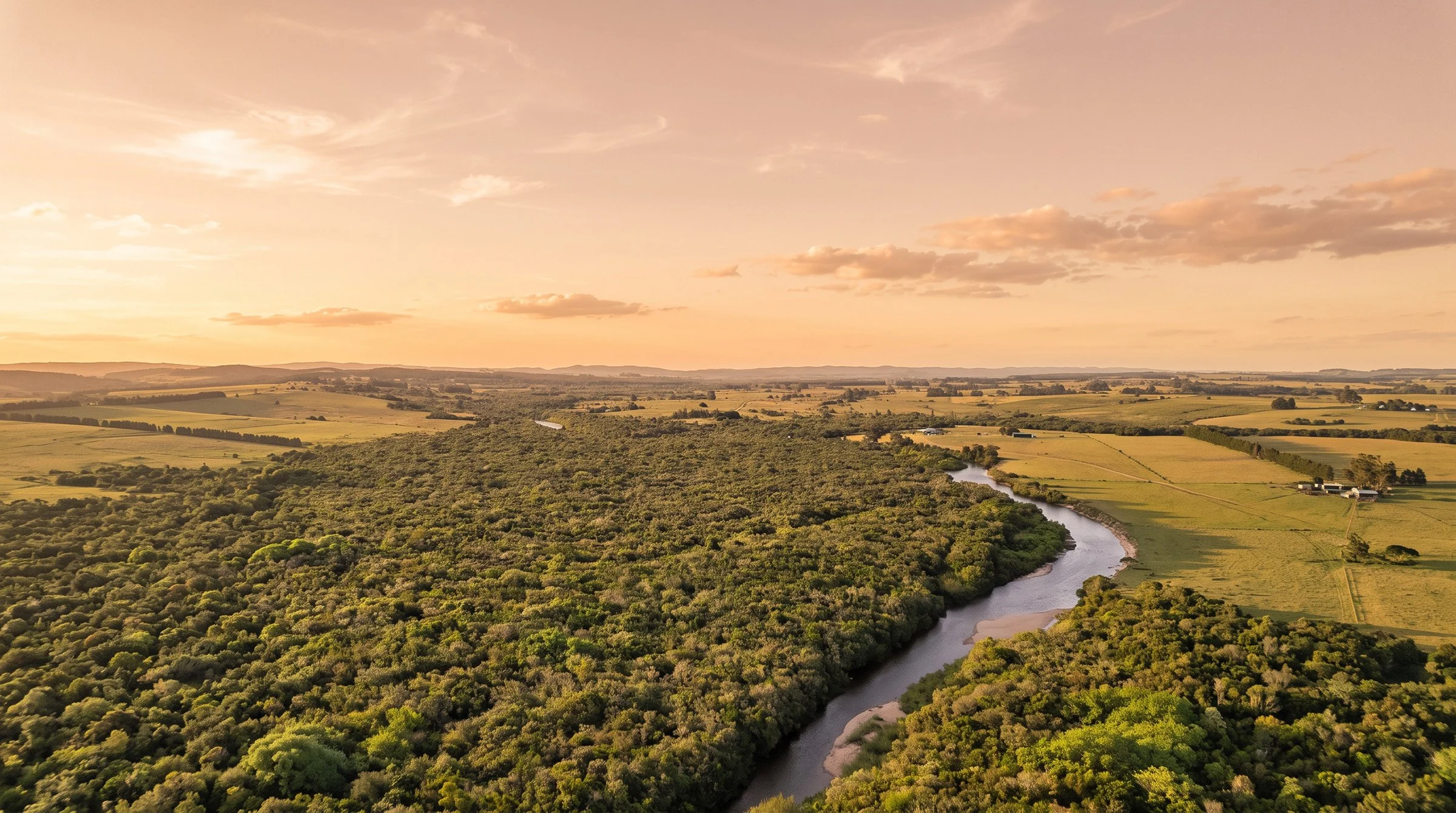
With a population of approximately 3.4 million people and 11.5 million cattle, Uruguay is one of South America's smaller countries. Situated between Brazil and Argentina, it receives relatively little international attention. Yet in several areas, from renewable energy to institutional stability, its performance compares favorably with much larger nations. Here are five figures that offer a different perspective on the country.
98% RENEWABLE ENERGY
In 2025, renewable sources accounted for 98% of Uruguay's electricity generation. Hydropower contributed 46%, followed by wind energy at 34%, biomass at 14%, and solar power at 4%.
This energy transition is the result of policies introduced over the past two decades, combining public investment, private participation, and diversification of electricity sources. Uruguay has significantly reduced its dependence on fossil fuels for electricity generation and has also become an exporter of electricity to neighboring countries.
While transport and other sectors continue to rely partly on fossil fuels, the electricity sector represents a substantial shift toward renewable energy.
5x THE GLOBAL AVERAGE IN FRESHWATER RESOURCES
Uruguay has approximately five times the global average of renewable freshwater resources per inhabitant, slightly exceeding even Brazil on this measure.
The country has an extensive network of rivers, streams, lakes, and reservoirs. It also lies partly above the Guaraní Aquifer System, one of South America's major underground freshwater reserves, shared with Brazil, Argentina, and Paraguay.
Freshwater is an important resource for Uruguay's agriculture, energy production, and population. However, the severe drought of 2023 demonstrated that abundant natural resources do not necessarily guarantee a reliable water supply. Infrastructure, storage capacity, and long-term water management remain essential.
92% INTERNET CONNECTIVITY
According to World Bank data, approximately 92% of Uruguay's population used the internet in 2024.
Over the past two decades, Uruguay has invested in telecommunications infrastructure, particularly through the expansion of fiber-optic networks and mobile connectivity. Public initiatives have also supported digital access, including the introduction of laptops and digital learning resources in schools through Plan Ceibal.
These investments have helped establish a high level of connectivity for a country with a relatively small population and extensive rural areas. Internet access has also supported the development of online public services, digital banking, and remote working opportunities.
100% CATTLE TRACEABILITY
Uruguay operates one of the world's most comprehensive national cattle traceability systems. Since 2011, the entire cattle herd has been subject to individual identification and registration.
Each animal receives a unique identification number, recorded through visual and electronic RFID devices. Information about its origin, ownership, and movements is maintained in a centralized national database.
Introduced partly to meet international food safety and export requirements, the system allows cattle to be traced throughout their lives. It is an example of how digital technology has been integrated into traditional agriculture, an industry that remains central to Uruguay's economy and exports.
FIRST IN LATIN AMERICA FOR RULE OF LAW
Uruguay ranked 23rd out of 143 countries worldwide and first in Latin America and the Caribbean in the 2025 World Justice Project Rule of Law Index.
The index assesses how effectively laws and institutions operate in practice. Its criteria include limits on government power, absence of corruption, regulatory enforcement, fundamental rights, and access to justice.
Uruguay's position reflects its established democratic institutions, independent judiciary, and relatively consistent legal framework. These characteristics contribute to institutional continuity and predictability, factors that are relevant to residents, businesses, and international investors alike.
Taken together, these figures illustrate several aspects of Uruguay that are less frequently discussed than its coastline and rural landscapes. They also reflect the country's combination of natural resources, technological development, and established institutions. For a broader perspective on what makes the country an attractive place to live and invest, explore Why Uruguay Stands Apart.
Sources & References
1. Renewable Energy (2025) — Uruguay Ministry of Industry, Energy and Mining (MIEM). Official electricity generation statistics MIEM
2. Freshwater Resources (2022) — World Bank, Renewable Internal Freshwater Resources per Capita. International freshwater comparisons
3. Internet Connectivity (2024) — World Bank, Individuals Using the Internet. Population internet-use statistics
4. Cattle Traceability — Uruguay Ministry of Livestock, Agriculture and Fisheries (MGAP). National livestock identification and traceability system MGAP
5. Rule of Law (2025) — World Justice Project, Uruguay Country Report. Global and regional rankings
